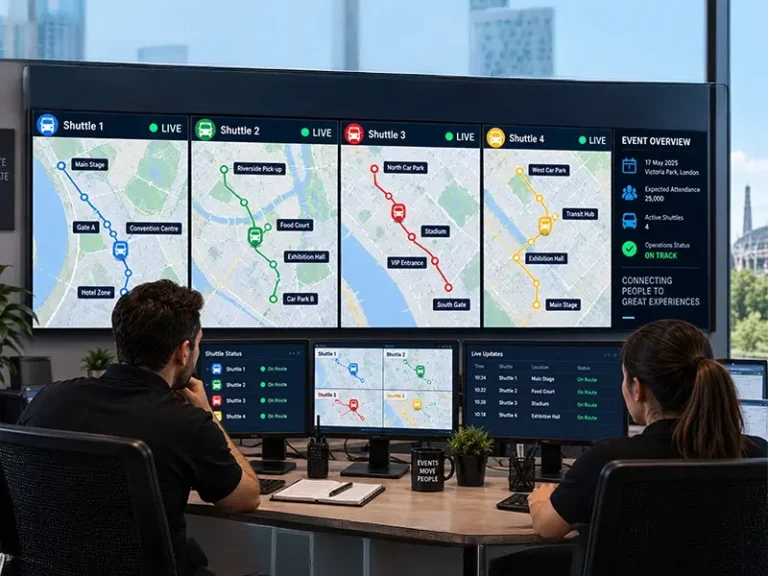
What’s the article about? This article describes how event transportation command centers operate and how they help large events in monitoring vehicles, coordinating teams, and making real-time transportation decisions.
Managing large events involves dealing with hundreds of vehicles, multiple routes, crowded venues, changing schedules, and thousands of passenger movements through a mere radio call and spreadsheet. When all the factors come together, it is more than difficult to handle operations, let alone smoothly. Therefore, to know what is going on on the ground, an event transportation command centre is a factor that shows critical gaps in transportation information in one operational view.
Why not dig deeper to understand what a command center is, how it collects data, monitors it, and helps event transportation teams decode what’s going on in real time?
What Is an Event Transportation Command Center?
An event transportation command center is an operational hub that helps in planning, monitoring, and managing transportation during an event. It is a centralized platform that connects transportation coordinators, dispatchers, venue teams, security personnel, and other authorized stakeholders with a shared view of vehicle activity. So, instead of checking multiple systems or waiting for manual updates, teams can use a single window to monitor vehicles, routes, schedules, and transportation activity from a particular location.
Here, the goal is simple and clear: to provide the teams with the necessary information when making decisions.
How Do Transportation Command Centers Monitor Live Event Operations?
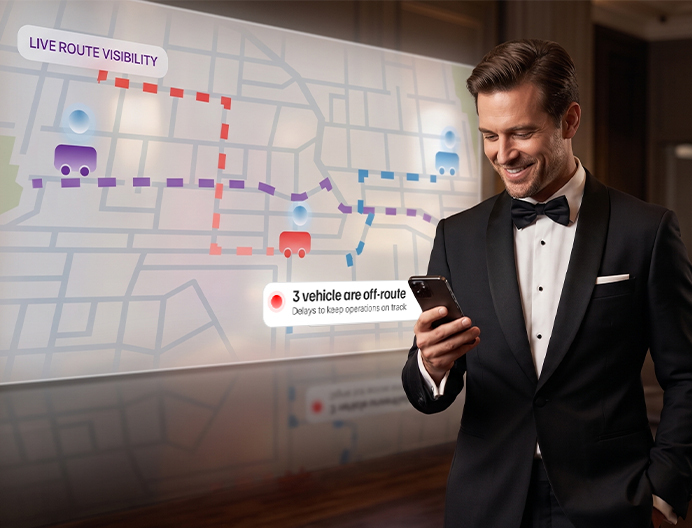
Modern transportation command centers rely on real-time data from GPS-enabled vehicles, driver devices, passenger systems, and other connected devices. A command center may display the following:
- Live vehicle location and movement
- Vehicle appointments and active trips
- Routes and pickup locations
- Estimated arrival times
- Delays and operational alerts
- Passenger activity and demand
- Chronological movement data
The live fleet dashboards provide multi-vehicle visibility, letting transport consultants view the overall on-site picture rather than tracking individual vehicles separately.
What Software Supports Event Transportation Command Centers?
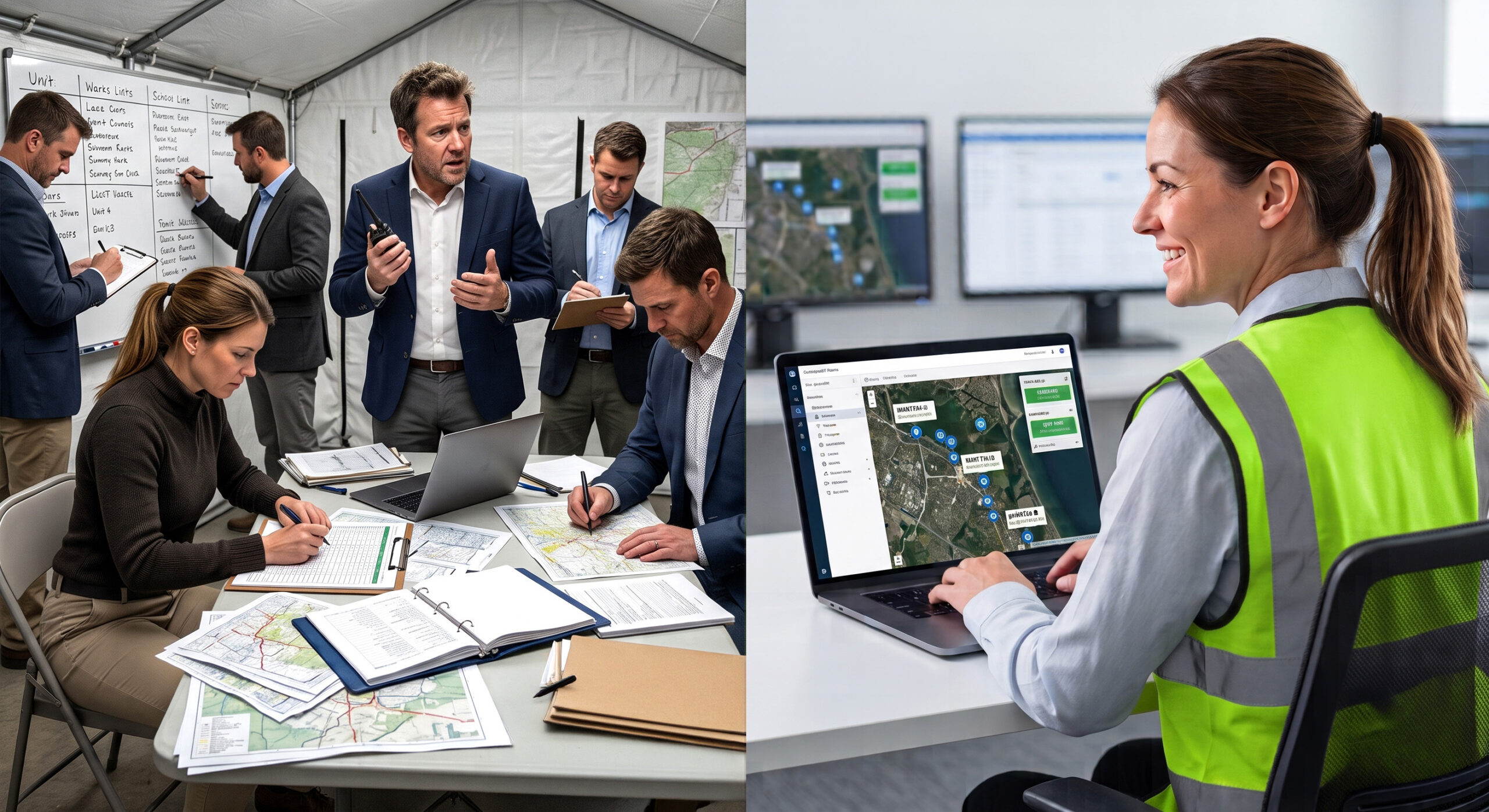
The software lets the command center do more than simply display vehicle locations. It helps teams in understanding transportation activity and coordinating responses. An event transportation platform includes GPS tracking, fleet monitoring, route management, ETA information, alerts, passenger data, and reporting. This is what creates centralized transportation control for events that reduces dependence on confusing spreadsheets, phone calls, and radio updates.
Furthermore, transportation management can be made more scalable by combining field operations with EventFalcon‘s software for large conferences, stadiums, concerts, and trade shows in a single operating environment.
What Tools Help Event Ops Teams Make Real-Time Transportation Decisions?
Effective command centers must have a hold on multiple sources of information. Real-time event transportation decisions can be assisted by:
GPS tracking → Live fleet dashboards → Alerts and ETAs → Cross-team coordination → Operational action
GPS tracking leads to real-time fleet dashboards, alerts and ETAs, cross-team coordination, and operational action. This is the simplest way to say this. For example, if several buses are delayed near a venue, coordinators can identify the affected vehicles, assess their locations and estimated arrival times. They can also communicate with dispatch or venue teams and determine whether vehicles or routes need to be adjusted.
This operational flow converts live event operations monitoring into actionable information rather than simply looking like a data collection method.
How Do Major Events Manage Transportation Through a Central Command Center?
Major events often have transportation networks that link hotels, parking lots, airports, venues, and other locations. Live event operations monitoring helps the team to align these services using a single operational view. This is especially important as conditions change. Many times, traffic can build unexpectedly, passenger demand can skyrocket, or a session or performance can end sooner than expected.
In all, with multi-vehicle visibility and cross-team coordination, event transportation coordinators can respond to what is happening now rather than what was planned throughout. Hence, the command center effectively serves as mission control for event mobility.
So, Why Do Events Require Centralized Transportation Control?
The benefits of an event transportation command center extend beyond tracking. It enables teams to transition from reactive communication to proactive operational decision-making in real time. What’s better than that?
Teams with centralized visibility can identify issues earlier, coordinate responses faster, and keep a more accurate record of transportation activity. After the event, the full chronological data can be used to conduct performance reviews and plan for future operations.
To put it in terms of your understanding, for complex events, the goal is not just to monitor each vehicle individually, but to understand the entire transportation operation as it unfolds, providing teams with the visibility they require to keep things moving.
Talk to our team and make event transport easier to manage.
Frequently Asked Questions
1. What is the meaning of an event transportation command center?
It serves as a central hub for tracking vehicles, routes, schedules, and transportation activity throughout an event.
2. How do event transportation command centers operate?
They consolidate live vehicle data, GPS tracking, ETAs, alerts, and operational information into a single shared view.
3. Which software is used in event transportation command centers?
Event command center software can provide live fleet dashboards, route monitoring, vehicle tracking, alerts, and reporting.
4. How do command centers facilitate real-time event decisions?
They provide operational teams with real-time visibility into transportation activity, allowing them to identify issues and respond more quickly.
5. Why do large events require centralized transportation control?
It improves multi-vehicle visibility, cross-team coordination, and decision-making as event conditions change.