What’s the article about? This guide explains how event transport teams can manage delays, observe passenger demand, route disruptions, and schedule adjustments using EventFalcon’s event transportation management software and real-time operational intelligence.
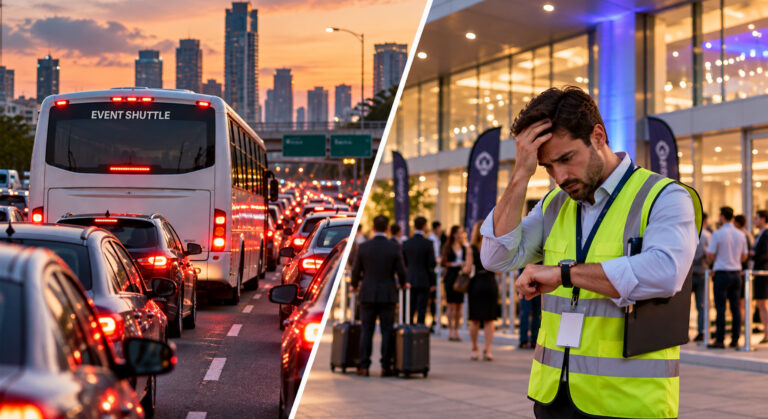
Event transportation can be disrupted by more than just one factor. Traffic congestion, delayed departures, drivers not following the designed routes, unexpected passenger demand, and schedule changes can all have an impact on vehicle movement for transportation teams.
EventFalcon’s event transport operations software helps teams gain visibility into operational activity and manage operations using real-time transport data, rather than relying on driver updates.
How Do Unexpected Changes Interrupt Event Transport?
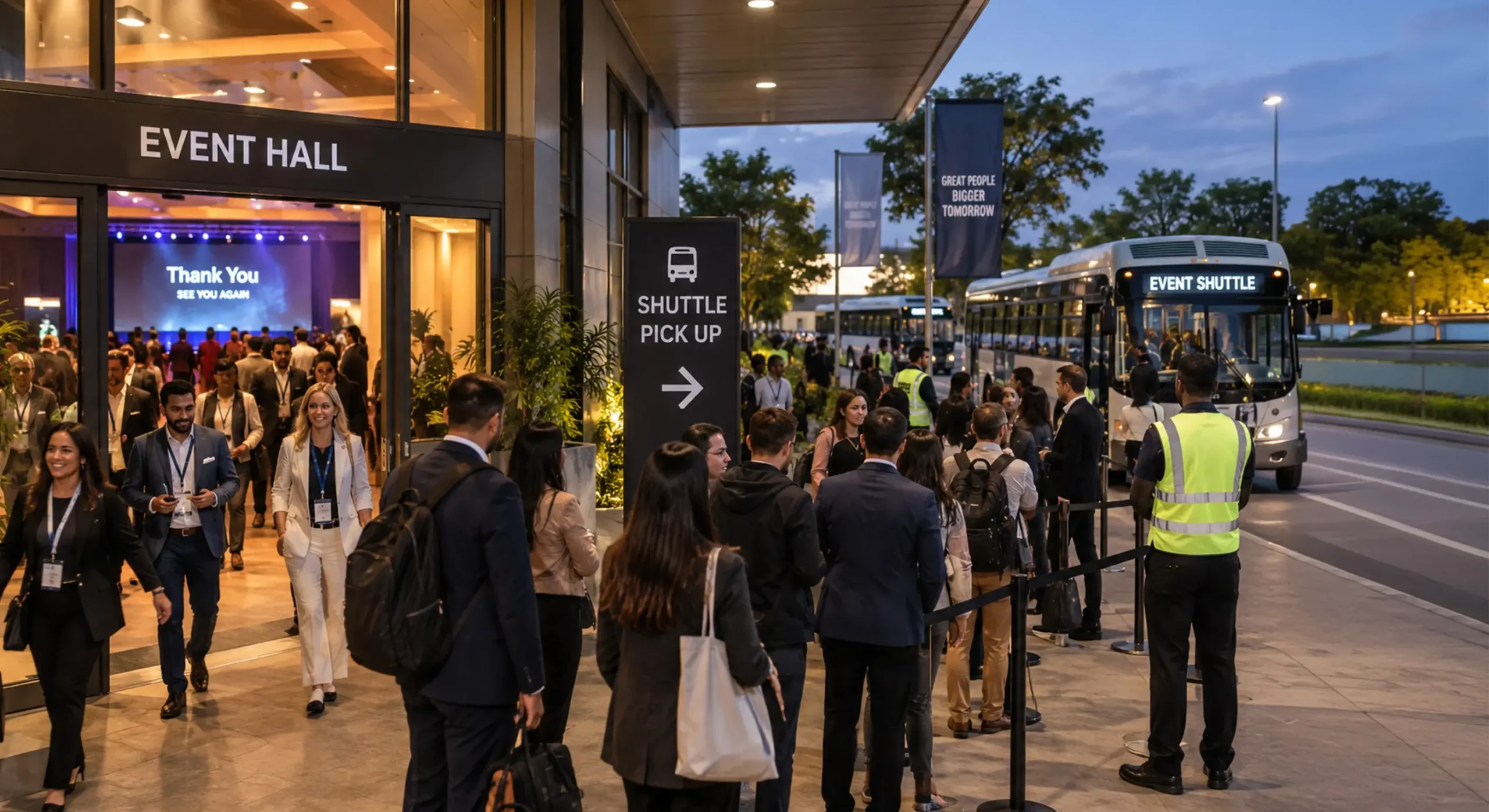
Overcrowding, weather conditions, and changes in event schedules can all affect where vehicles can stop and how long journeys take. Even minor interruptions can have a major impact on the overall transportation plan.
A few common challenges include:
- Vehicle Bunching: Delays cause several shuttles to arrive together, while passengers at other stops wait longer.
- Changing Passenger Demand: Some pickup points become jam-packed, while vehicles on other routes have excess capacity.
- Unexpected Route Restrictions: When there are temporary road closures or changes to venue access, drivers must follow updated instructions.
- Schedule Disruptions: They include delayed sessions and extended activities, which have an impact on planned departures and shuttle availability.
- VIP Arrival Coordination: Changes to guest schedules or access arrangements necessitate closer collaboration between the transportation and event teams.
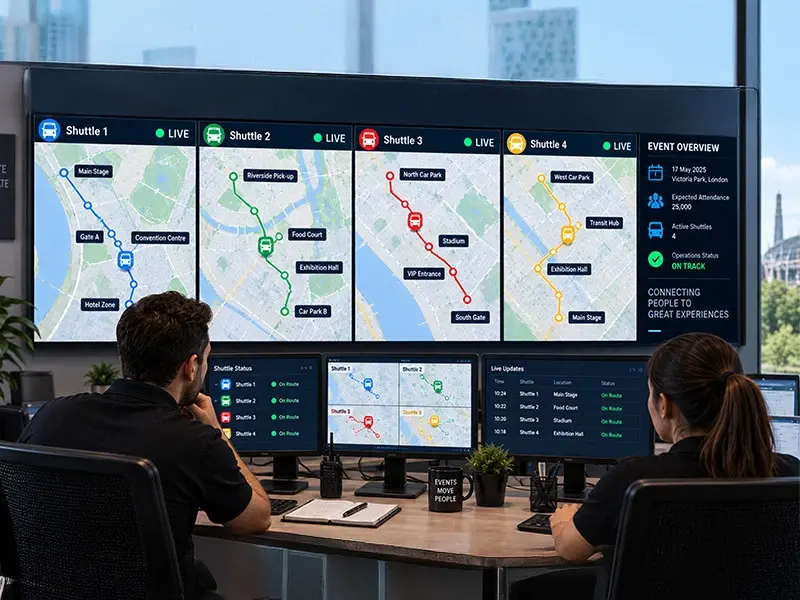
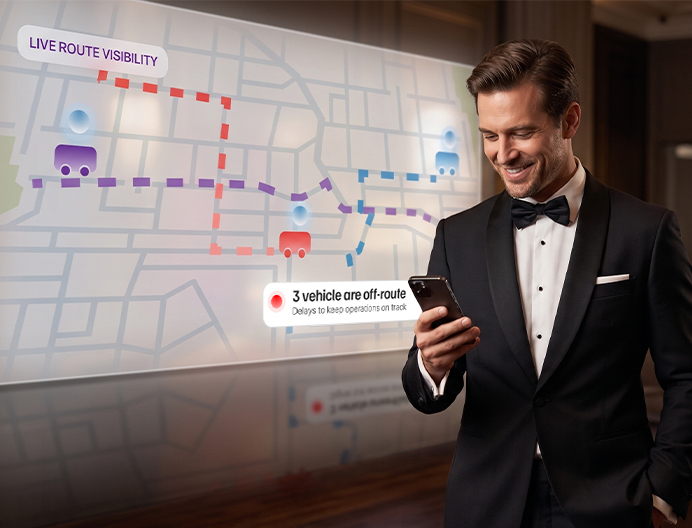
EventFalcon’s GPS tracking and operational visibility features help teams track vehicle movements and assess situations throughout the transportation operations.
Why Manual Ways Fail During Operational Changes
Manual coordination is difficult, especially when dealing with a large group of thousands. A telephone call may only reach one driver at a time. Radio checks can be disrupted, rather than providing a complete picture of the real-time situation. Even group chats leave no audit trail, making it impossible to prove what was decided or when.
By the time you reach forty drivers, the first bottleneck has formed.
5 Steps to Manage Event Transport Disruptions
Use this five-step response playbook to keep operations running even when conditions change.
- Confirm the Issue: Determine whether the interruption is due to traffic, passenger demand, a delayed schedule, or a change in venue access. Then, decide which routes and time slots are affected.
- View the Entire Fleet: Using EventFalcon’s event transport operations software, review available vehicle-location data to know where shuttles are operating and which aspects of the operation may require attention.
- Adjust Routes and Timings: If necessary, coordinate updated driver instructions, revise departure times, and redirect vehicles around impacted areas. Teams can use ETA and ETT information to scrutinize changing journey times.
- Rebalance Capacity: Evaluate passenger demand and available vehicles. Keep considering the reallocation of buses from low-demand routes to higher-traffic areas where it is feasible or required.
- Communicate and Log: Keep drivers, ground staff, and relevant event teams updated on approved changes. Keep track of key decisions for coordination and post-event reviews.
In this 5-step rulebook, steps 2 and 4 are where most teams struggle without live data. That’s why EventFalcon’s event shuttle management platform is both simple to use and extremely valuable.
How Event Transport Command Center Software Keeps You in Control
Event transport command center software displays all vehicles, routes, and passenger flows on a single screen. Whenever there is a change in the plan, differences appear as they occur, allowing you to react in seconds. This is better than waiting for a complaint to reach the person in charge. This is the problem EventFalcon was designed to solve. The software is designed for event operations rather than delivery or field-service tracking.
One can monitor their shuttle and VIP fleet with VIP reservations at an international motorsports circuit in South Florida, or manage cross-venue coordination across mountain regions at a winter athletic event in the Italian Alps.
Not only that, but you can keep track of multi-hotel shuttle programme management while attending a Las Vegas cloud technology conference. These are environments in which venue-side changes are common.
How to Prepare Your Fleet for Last-Minute Changes
To be honest, planning for changes makes it much easier to deal with them. As a result, here’s what you need to know before organizing an event from now on:
- Prepare the Alternative Routes: You must map out backup pickup zones and routes for each gate to avoid hassles and unnecessary chaos.
- Define the Roles: Good management means deciding who authorizes a reroute and who briefs drivers beforehand.
- Plan for Passenger Surges: Determine expected peak periods and how available vehicles can be reassigned as demand changes.
- Review Past Data: Analyze historical data to identify recurring issues, including route performance, arrival times, passenger counts, and fleet utilization.
EventFalcon’s event dashboard and reporting capabilities can help teams review operational data and use past performance to inform future planning. If historical event replay or simulation is available in the client’s setup, it can be highlighted as a way to evaluate previous routes and stops before the next event.
The Bottom Line: Turn Event Transport Data Into Better Decisions
Event transportation disruptions are difficult to avoid, but their impact can be managed more effectively when teams have accurate information and clear response procedures.
ETA accuracy, route performance, passenger flow, and fleet utilization can all help planners determine how well an operation performed. Reviewing these metrics following an event provides teams with evidence to identify bottlenecks, improve resource allocation, and strengthen plans for future events.
Transport teams can use EventFalcon to combine fleet visibility and operational information into a more efficient workflow. Share your event transportation needs with EventFalcon to see how its event mobility capabilities can help you plan your next operation and make more informed decisions.
Discover EventFalcon's event transportation analytics and tracking capabilities.
Frequently Asked Questions
1. What are common event transportation challenges?
There are many, but a few that happen now and then are traffic delays, shuttle bunching, passenger surges, and schedule changes that interfere with the smooth running of event transport operations.
2. What is event transportation command centre software?
It is a platform that provides a central real-time view of fleet activity. The activity recorded further helps teams monitor vehicles and coordinate transport operations.
3. Can GPS tracking help manage event transport delays?
Yes, GPS tracking helps teams monitor vehicle locations and identify routes affected by delays.
4. How does EventFalcon differ from traditional fleet tracking?
EventFalcon focuses on event transport, offering capabilities such as fleet visibility, passenger counting, VIP tracking, and post-event analytics.
5. How can transport data improve future events?
By analysing arrival times, passenger demand, and fleet utilisation, planners can improve schedules and resource allocation.