What’s the article about? This article explains how event transportation management can help reassign vehicles when passenger demand changes, without creating delays on other routes.
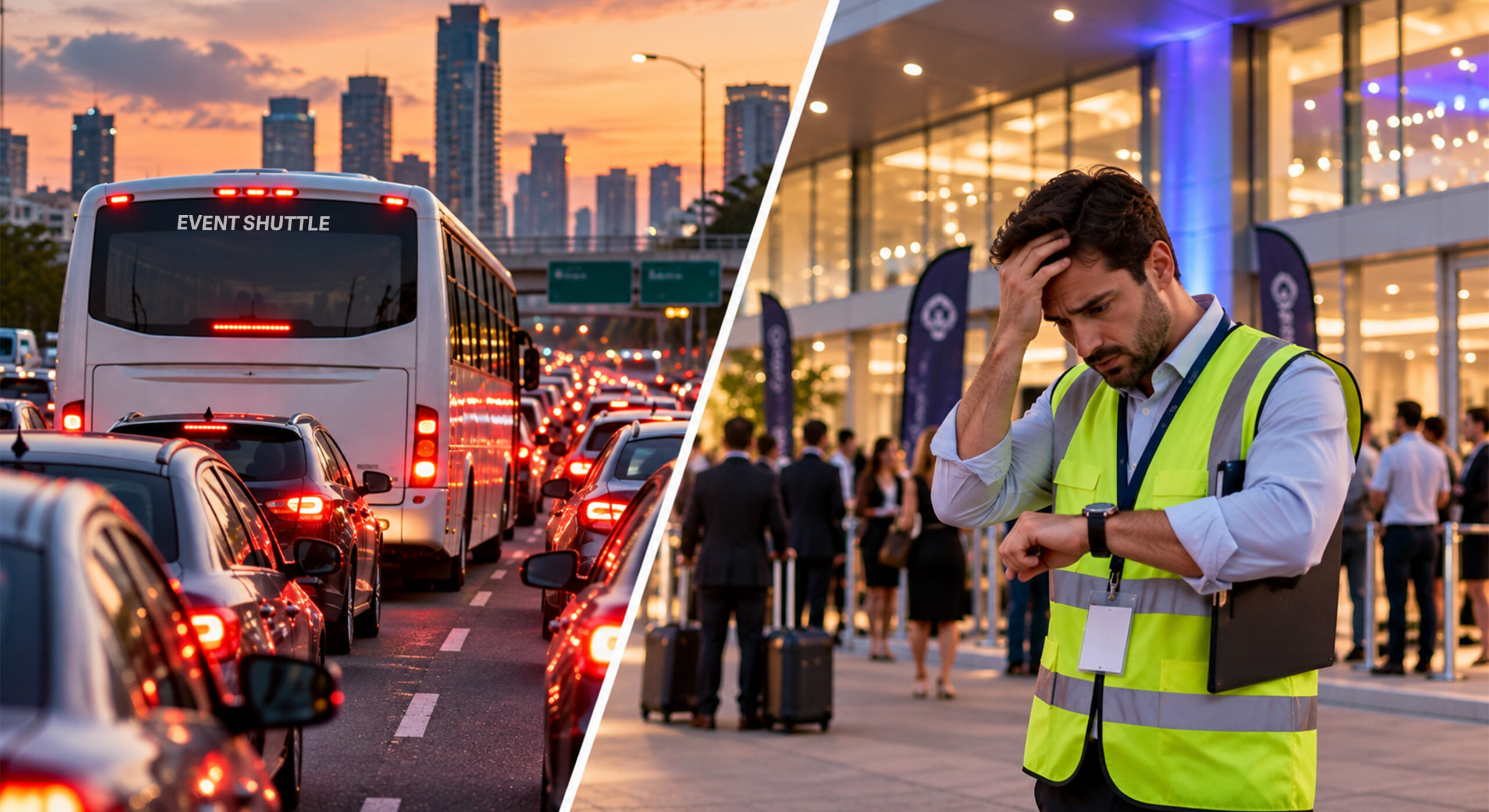
When thousands of people attend a festival, conference, or sporting event, it’s no wonder that the vehicles demand would keep fluctuating throughout the day. One pickup point may have a long line, while another location’s buses might be carrying only a handful of passengers.
Here comes the ultimate work of the operations teams who must decide where to send the next bus, which route might save a vehicle, and how to avoid delays elsewhere. Seems easy, but this challenge is more than just moving buses. But here’s how your team can keep the entire event transportation operation running smoothly.
When Should Event Teams Move Vehicles to Another Route
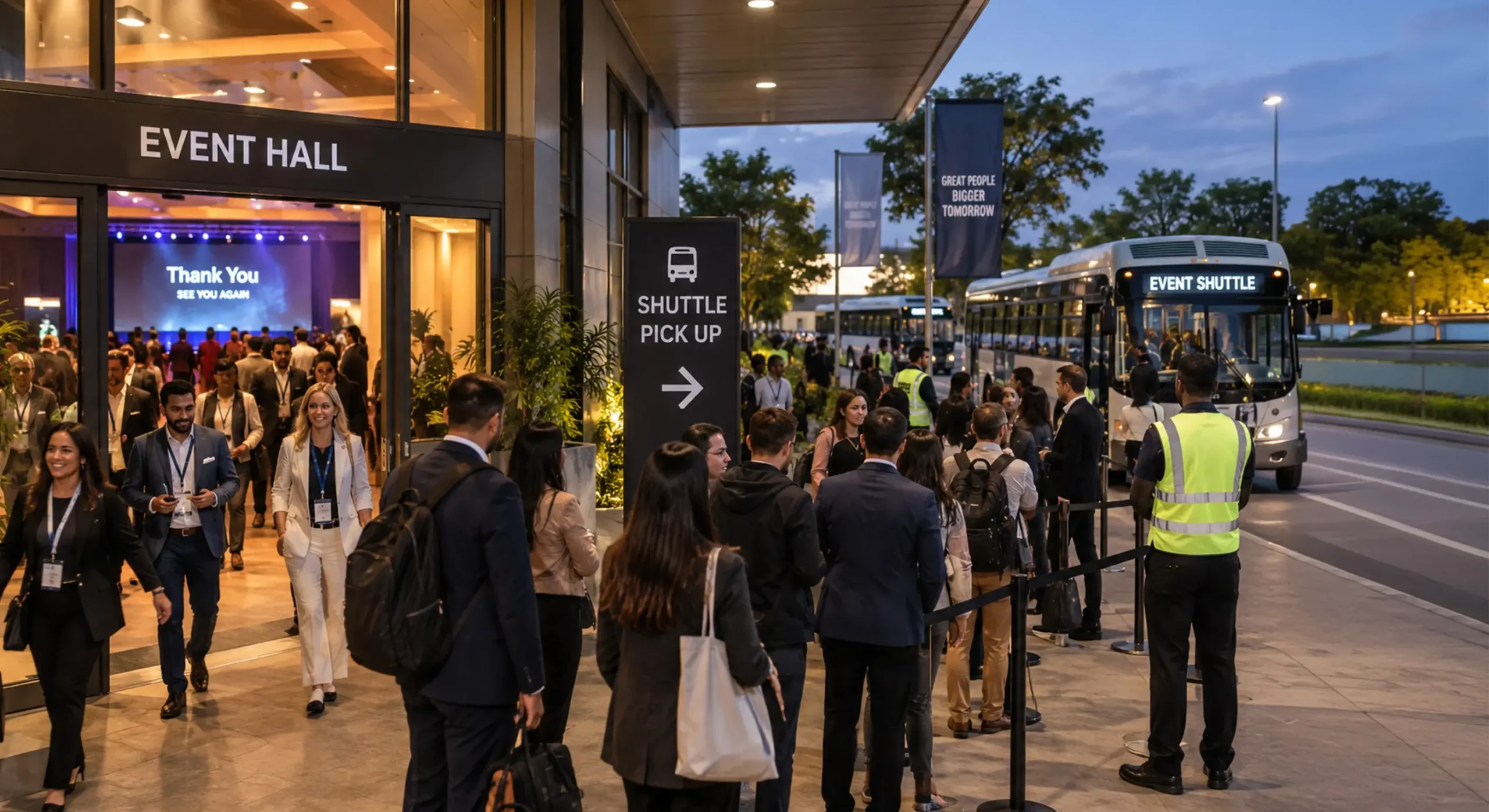
Theoretically, a bus should be migrated if the change is likely to improve overall service. For example, if a concert ends earlier than expected, the exit area may need more buses than previously planned. Sending more vehicles can help clear passenger queues faster.
However, moving every available bus to the crowded location might cause problems elsewhere, and that’s the real job to handle. Teams must take passenger demand, existing route commitments, traffic conditions, and the duration of the bus to arrive at its new destination into account before making a decision.
Effective event transportation management with EventFalcon’s very capable platform helps in making decisions based on the needs of the entire network, rather than responding to one crowded stop.
How Can Teams Reassign Vehicles Without Delaying Other Routes
Before moving a bus, operations teams must ascertain if another pickup point is relying on it. Event transport monitoring allows teams to understand vehicle locations and route progress even better.
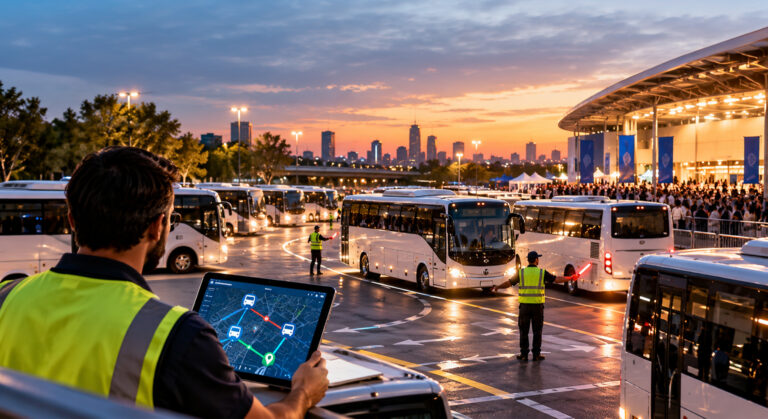
Event fleet GPS tracking helps dispatchers to identify nearby vehicles and determine which ones are suitable for reassignment. However, location alone does not imply availability. Drivers still require clear instructions, and teams must consider traffic, access restrictions, and existing commitments.
In this, the most practical approach is to identify reserve buses prior to the event, know where each vehicle is, establish priority routes, and explicitly state who can approve changes. This will reduce confusion while making quick decisions.
What Information Do Dispatchers Need Before Moving a Bus
Dispatchers look for more than just a map of where each bus is located. They need to know where passengers are waiting, which vehicles are expected first, and whether moving a bus will leave another route under capacity.
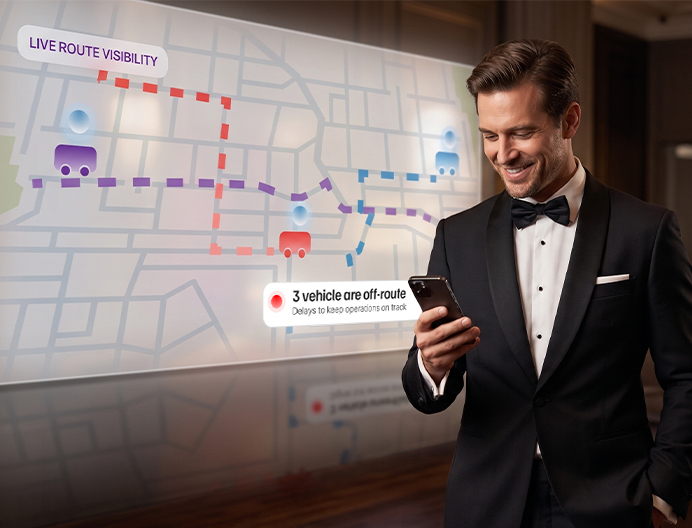
An event transportation dashboard brings vehicle location, estimated arrival times, and route status together into a single view. Teams can use an event mobility intelligence platform to combine these operational details and better understand changing demand.
An event transport command centre can also help dispatchers, drivers, and ground staff work together more hand-in-hand. The aim is to make sure that everyone is following the same updated plan rather than working with conflicting instructions.
How Can Event Planners Improve Vehicle Allocation for Future Events
After the event, consider where the vehicles were moved, why those decisions were made, and what happens next. Ask a few questions like:
- Did passenger lines get shorter?
- Did any other routes experience delays?
- Does the route’s expected travel time (ETT) were consistent?
- Were reserve vehicles available when needed?
Actually, these findings will help you in planning future schedules, locations, and emergency plans. This data can also show whether the initial fleet allocation matched actual passenger demand.
In all, the best vehicle allocation decision is one that improves service across the entire network, not just at one location. When teams plan for changing demand and communicate changes clearly, they can respond to disruptions without turning a local issue into a larger transportation delay.
Discover EventFalcon's event transportation analytics and tracking capabilities.
Frequently Asked Questions
1. When should event operations teams relocate vehicles to another route?
Event operations teams should reallocate buses between routes when passenger demand shifts, queues grow, or one pickup point needs more capacity than another. This is especially important during egress at large events, when attendees leave the venue at the same time and travel in different directions.
2. How do event teams reassign vehicles without causing delays?
They consider passenger demand, vehicle availability, travel time, and existing route commitments before making any changes.
3. How can event fleet GPS tracking assist with bus reassignment?
The software helps dispatchers locate buses and track route progress and travel times, then identify vehicles that may be eligible for redeployment.
4. What information do dispatchers require to make better bus scheduling decisions?
They require vehicle locations, passenger queues, estimated arrival times, route schedules, and information on future transportation demand.
5. How can event planners better allocate buses for future events?
Planners can improve transportation schedules by reviewing passenger wait times, vehicle utilization, route delays, and previous reassignment decisions.