What’s the article about? This article explains how event teams can improve attendee transportation sustainability by making fleet utilization better with real-time vehicle tracking and post-event transport analytics.
What if every vehicle movement at your event could be monitored not only by time and distance, but also by environmental impact?
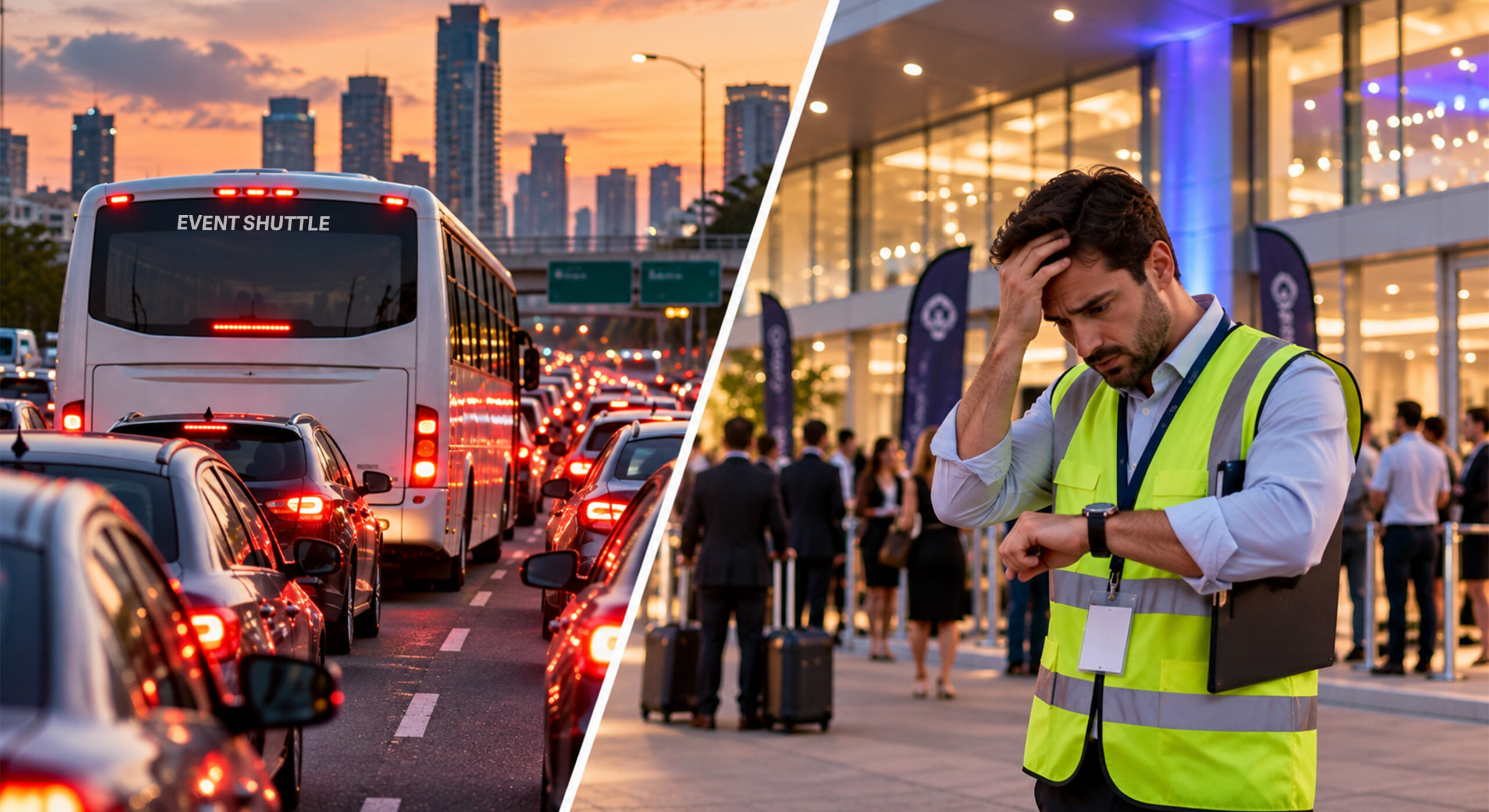
Thousands of people are moved by large events through hotels, venues, airports, parking lots, and transit hubs. This movement definitely has an environmental cost. Therefore, sustainable event transportation is an important consideration in modern event planning. Here, the goal isn’t just to use environmentally friendly vehicles but to reduce unnecessary trips, optimize vehicle utilization, promote shared mobility, and track the activity throughout.
Sustainable Event Transportation for Large Events
Transportation is a huge source of carbon emissions in the United States. The EPA, or the Environmental Protection Agency, recommends taking public transportation, walking, biking, and carpooling to reduce pollutants.
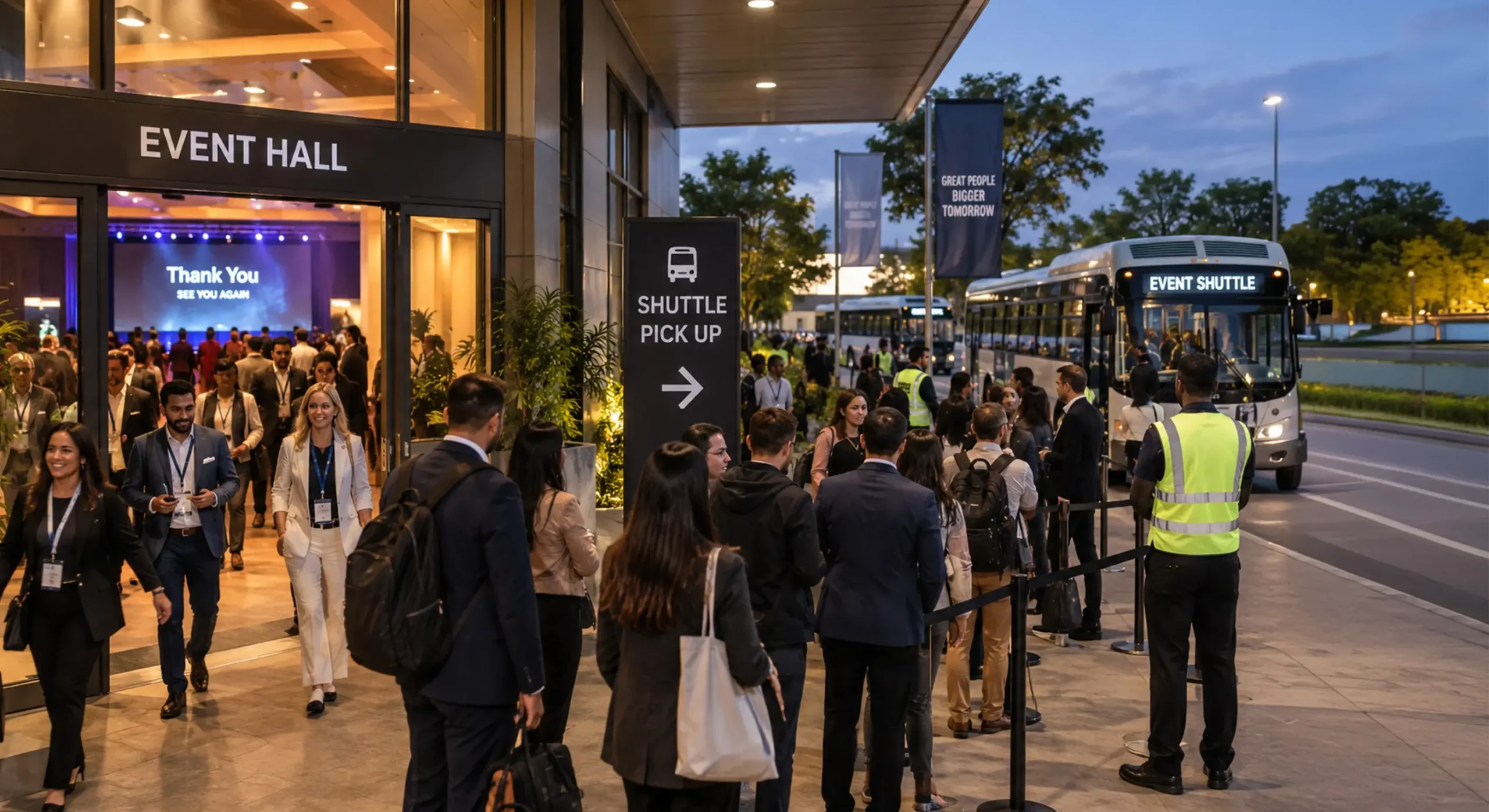
A sustainable event transportation solution plan should include shuttles, public transit connections, shared rides, routing, and fleet allocation in the most effective way. The goal is to move attendees while reducing unnecessary vehicle movement.
How Can Event Transportation Management Software Reduce Emissions?
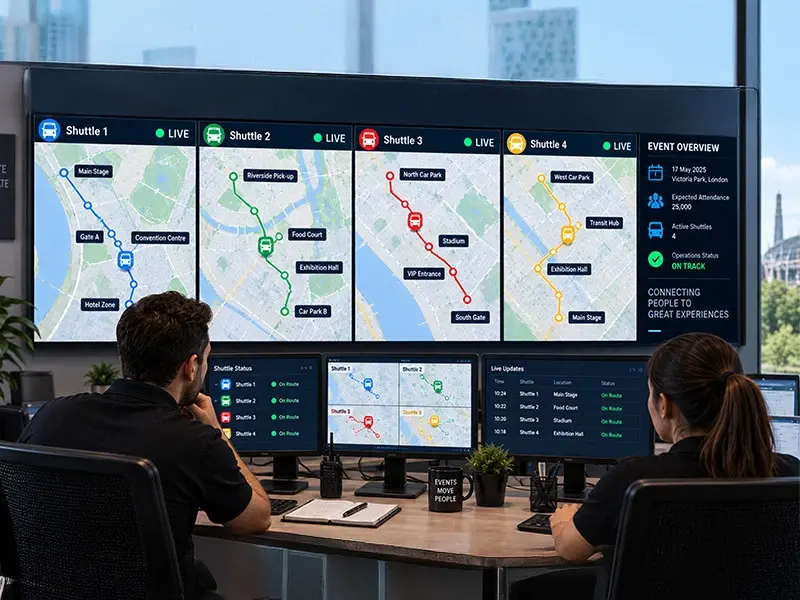
Event transportation management software helps teams to understand how vehicles are used throughout an event. Real-time vehicle tracking displays vehicle locations, routes, stops, travel times, and idle periods. This visibility can reveal where vehicles are underused or where multiple vehicles serve a similar demand. Teams can change tasks, maximize route utilization, and reduce any unwanted movement.
Real-Time Vehicle Tracking For Sustainable Mobility
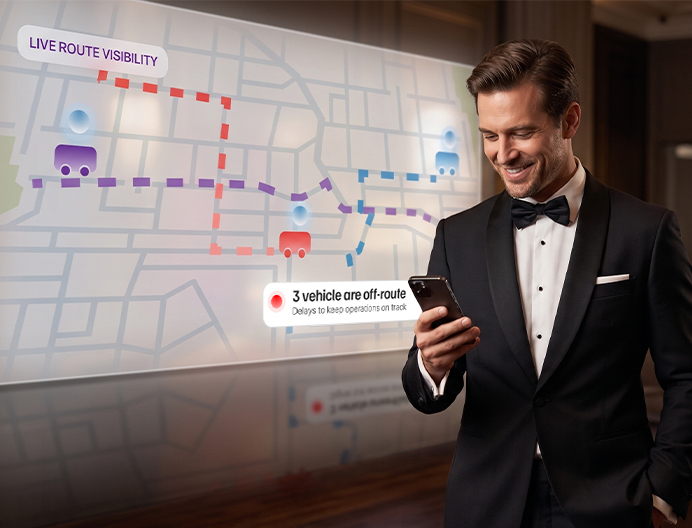
Real-time vehicle tracking allows for the measurement of sustainability during the event. If a shuttle is delayed, unutilized, or operates outside of its planned route, transportation teams can identify and address the problem.
The EPA also notes that an effort to eliminate empty trips, or traveling without passengers, can lessen some of the efficiency advantages of shared rides. Keeping a check on empty mileage is important for sustainable event transportation.
PAX Counting to Improve Sustainable Event Transportation
PAX counting suggests how many passengers use one route, vehicle, or service. This allows event teams to compare available capacity with real-time demand. If one route is under capacity while another experiences passenger surges, planners can adjust vehicle allocation. A better match between supply and demand can reduce unnecessary trips while maintaining service levels.
What Metrics Should Sustainable Event Transportation Teams Track?
A sustainable mobility strategy requires measurable data. Useful metrics include:
- Passenger volume and PAX per route
- Vehicle utilization and idle time
- Empty or deadhead mileage
- Route-specific travel and dwell times
- Trips completed, round-trip time
- Fleet deployed versus fleet used
- Demand varies during peak periods
These metrics can be evaluated using post-event transportation analytics to identify problems and plan improvements for future events.
Event Teams That Measure and Improve Transportation Sustainability
An event transportation command center can combine GPS data, passenger information, routes, ETAs, and fleet activity into a single operational dashboard. Teams can use this data to coordinate vehicles during the event and evaluate afterward.
ISO 20121:2024 defines a framework for managing sustainability across events and encourages organizations to consider environmental, social, and economic effects.
Sustainable mobility is an important element of smarter event operations. Teams can reduce avoidable movement by utilizing live visibility, passenger intelligence, fleet planning, and post-event analytics, while also improving attendee transportation predictability and measurement.
Discover EventFalcon's event transportation analytics and tracking capabilities.
Frequently Asked Questions
1. What is "sustainable event transportation"?
It includes the planning and management of attendee mobility in order to reduce unnecessary trips, empty mileage, and emissions.
2. What are some ways that event transportation can reduce its environmental impact?
Improved routing, shared mobility, vehicle utilization, and real-time tracking can all help reduce unnecessary vehicle movement.
3. How does passenger counting promote sustainable transportation?
PAX counting identifies actual passenger demand, allowing teams to match vehicle capacity to ridership.
4. What purpose does real-time vehicle tracking serve?
It helps the team to monitor routes, idle vehicles, empty mileage, fleet utilization during an event, and provides legible sustainability reporting with them.
5. How can event teams assess transportation sustainability?
They can monitor passenger numbers, vehicle utilization, empty mileage, trip data, and other post-event transportation metrics.