What’s the article about? This article explains how post-event transport analytics can help event teams measure vehicle performance, passenger demand, route efficiency, delays, vehicle CO2 emissions & sustainability analysis, and other key operational metrics to improve future events.
Is post-event transport analytics the ultimate solution in the event transportation space? Well, yes, it definitely is. Large events generate a steady stream of operational data factors required to run the event successfully. The collected data is used to evaluate those factors, including what worked, where delays occurred, and what should be changed the next time. Post-event analytics helps event transportation teams assess vehicle performance, passenger demand, route efficiency, and response times.
This might be a little technical for you, right? So, let’s get right into it and look at the key metrics used to analyze how the event was carried out.
Which Transportation Metrics Should Event Teams Measure?
After understanding what post-event transport analytics actually is, the most useful metrics used in events vary, but several common measurements provide a strong operational baseline, such as:
- Vehicle utilization and trip volume
- On-time performance and delays
- Average and Actual ETAs
- Route and Stop Performance
- Passenger Volumes by Route or Time
- Pickup and drop-off activities
- Incident frequency and response time
- Vehicle idle and operating hours
How Does a Passenger Counting System Improve Event Analysis?
Passengers are what make the event successful. What if you had a system that shows you how many people are using a particular vehicle, route, or service? Yes, EventFalcon’s passenger counting system does exactly that. Without the passenger data, teams may know where the vehicle travels, but not whether capacity matched the demand or not.
Another term, PAX counting, helps you identify busy periods, underused routes, and locations that require additional service. So, when passenger counting happens, it not only tells how many people are there in total, but also helps transport coordinators make more informed decisions about fleet allocation and scheduling.
How Does Real-Time Vehicle Tracking Support Post-Event Analytics?
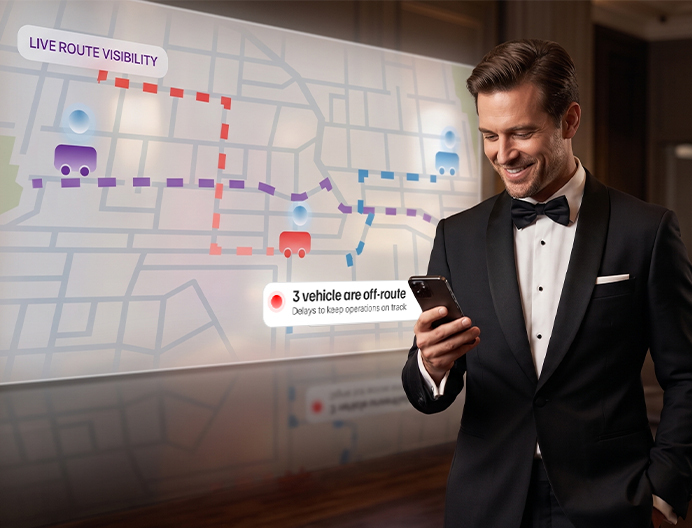
Real-time vehicle tracking tracks movement on-the-spot and creates a record of how the fleet actually travelled. After an event, teams are able to review the movements, route deviations, delays, stops, and travel times.
This answers the most important part of EventFalcon’s event transport management software, making it both objective and useful for planning and execution purposes.
How Does Event Transport Management Software Improve Future Events?
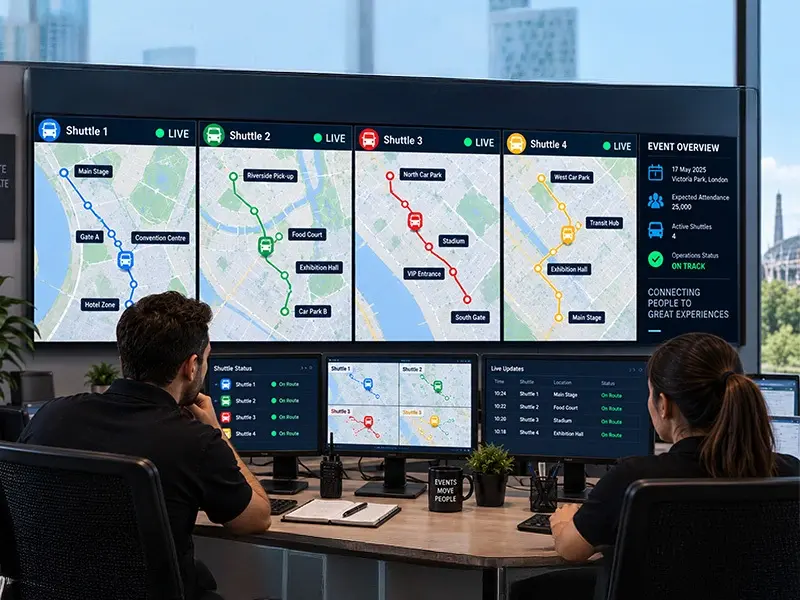
Here, the goal of analytics is not just to generate sustainability reporting but to use the findings to improve the following operations. EventFalcon’s event transport management software brings together the best event transport tracking software features, passenger data, alerts, ETAs, and reporting in a single environment.
With the right data, teams can adjust routes, allocate vehicles, maintain schedules, and deliver data-driven decision-making based on evidence rather than guesswork. Thus, the goal remains simple: using every event as a source of operational learning.
With consistent post-event transport analytics, your team can strengthen its plans, optimize resource allocation, and make future operations more predictable. Make better decisions for the next event based on the data you collected.
Discover EventFalcon's event transportation analytics and tracking capabilities.
Frequently Asked Questions
1. What questions can post-event analytics address?
EventFalcon’s post-event analytics can help answer practical questions about passenger demand, fleet utilization, route performance, and event egress, such as:
- Which routes had an oversupply or a shortage of vehicles?
- When did passenger demand reach its peak?
- How long did it take to clear the venue?
- How many vehicles were moving vs. idle?
- How long did each round trip take, and where did the time go?
- How much of the fleet went empty?
- What number of vehicles were actually deployed and carrying passengers?
- How did key transportation metrics compare to the previous event?
These insights help event teams understand what happened and make better transportation decisions for the next event.
2. What is post-event transportation analytics?
In simple terms, it is the process of reviewing transportation data following an event to assess performance and make improvements.
3. What metrics should event teams monitor?
Teams must be able to monitor delays, vehicle utilization, passenger volume, ETAs, routes, and response times.
4. How can PAX counting benefit event teams?
PAX counting measures passenger volume and helps teams understand demand across routes and time periods.
5. Why is real-time vehicle tracking necessary?
Because it logs vehicle movements, delays, routes, and travel times to aid operational analysis.
6. How can event transportation management software help?
It brings together tracking, passenger data, alerts, ETAs, and reports, which helps in event planning and making data-driven decisions.