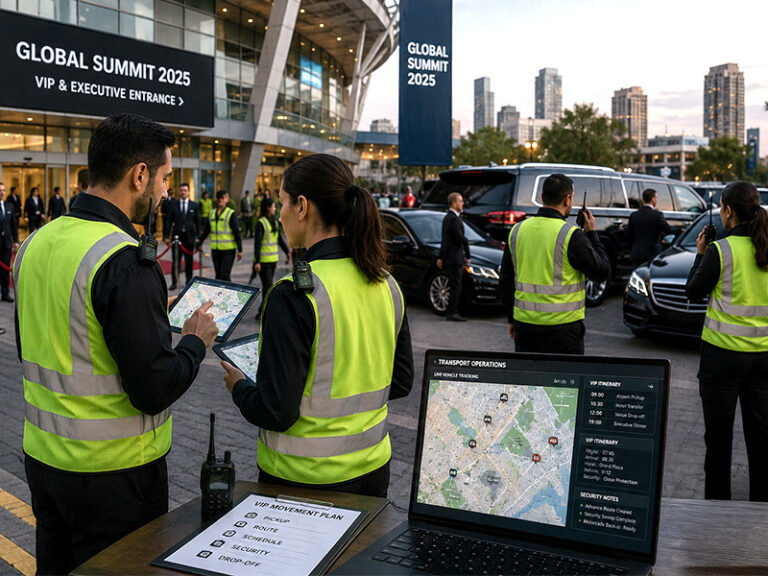
What’s the article about? Large events need more than basic fleet tracking to manage executive and security-sensitive travel. Gain an in-depth knowledge of VIP transportation management and how contingency planning keeps priority movements on track.
Management of VIP transportation isn’t as easy as it might seem! Which important person is coming and how they are treated make a huge difference overall. Moreover, VIP transportation at a major event, like the F1 races, the Olympics, or even concerts, is more than simply assigning a premium vehicle and a driver. From executives, celebrities, sponsors, to speakers and other high-profile guests, things operate on extremely tight schedules with distinct security and privacy requirements. One miss, and the game is over. So, how is VIP transportation really managed? Through EventFalcon’s VIP transport tracking software!
For those who really want to make a difference within their setup, you’ve landed on the right page. VIP event transport management provides transportation teams with control that gives them access to vehicles, routes, ETAs, and schedules. This further ensures that there is no mixing of VIP movements with general attendee shuttle operations. Let’s explore how this happens in real-life scenarios, where at times, chaos takes the lead over peace.
How Do Large Events Keep VIP Transportation Separate?
Of the hundreds of vehicles serving attendees, only a small number are assigned to VIPs at large conferences, stadium events, and even trade shows. VIP operations require different workflows than the normal attendee movements. A dedicated VIP event transport management setup must organize the following:
- VIP vehicles
- Approved pickup and drop-off locations
- Dedicated drivers and routes
- Arrival and departure schedules
- Security-sensitive movements
- Restricted access to vehicle information
- Alerts when VIP vehicle enters or exits certain zones/geofences
What Is the Difference Between Standard Fleet Tracking and VIP Transportation Management?
While the standard fleet tracking might answer questions like, “Where is the vehicle?” “Is it moving?” and “What route is it taking?” VIP management adds an additional operational layer around such questions. Let’s know the in-depth difference between the two: