What’s the article about? Should event transportation rely on spreadsheets, radios, or software? This guide compares manual, custom-built, and platform-based approaches to help event transportation teams select a scalable method for real-time operations.
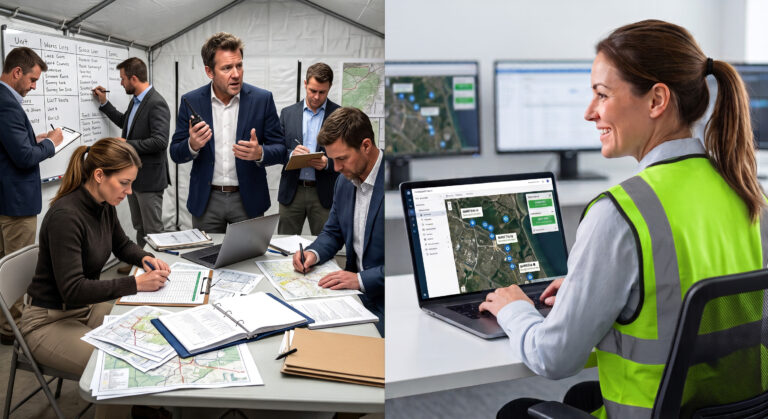
Managing an event transport begins with a spreadsheet for vehicle assignments, radios for driver communication, routes drawn on paper, and a few coordinators watching the operations. But is it doing any good in today’s chaotic world?
Multiple venues, hundreds of attendees, vehicle movements, changing schedules, and arrivals and departures of VIPs make manual coordination difficult. That’s why event transport coordinators need something sturdy, like event transportation management software that can make things simple and steady.
So, let’s compare the three major management approaches: whether you should rely on spreadsheets, build a platform yourself, or consider buying EventFalcon software for seamless results.
Are Spreadsheets and Radios Enough for Event Transportation?
So, let’s start with understanding our first approach. Spreadsheets and radios are amazing ways to break through small and straightforward operations. Teams are able to make passenger lists, manually check who will be going in and out, assign drivers when needed, and schedule activities without investing in specialized technology.
The problem begins when information changes faster than people are able to update it. A spreadsheet isn’t capable of providing real-time vehicle tracking, while radios also depend on drivers and dispatchers, if only they share accurate updates.
Therefore, for a small event with a handful of vehicles and attendees, the spreadsheet approach is palpable. For large-scale events, operational risks need something that’s more steadfast and staunch.
Should You Build Custom Event Transportation Software?
Well, while you can definitely build a custom event transportation tracking system, it will require a lot of ground effort, including an established technical team, resources to maintain the system over time, and people who can operate the system with finesse.
Building a transportation tracking software isn’t just a development project, but a lot of high-tech science. It needs to have the following notations included:
- GPS integrations
- Geofence-compliance
- Driver interfaces
- Customer-facing interfaces
- Maps
- Dispatch workflows
- Data security
- User permissions
- Alerts
- Reporting
- Testing
- Maintenance
- Ongoing updates
As a result, many event organizers find that developing an entire event fleet management platform internally takes time and resources away from the actual transportation operation.
Is Buying Event Transport Command Center Software More Practical?
This is by far the most feasible approach for both small- and large-scale events. For teams that need seamless operational visibility without using paper or building technology from scratch, buying EventFalcon’s event transport software is the most practical way.
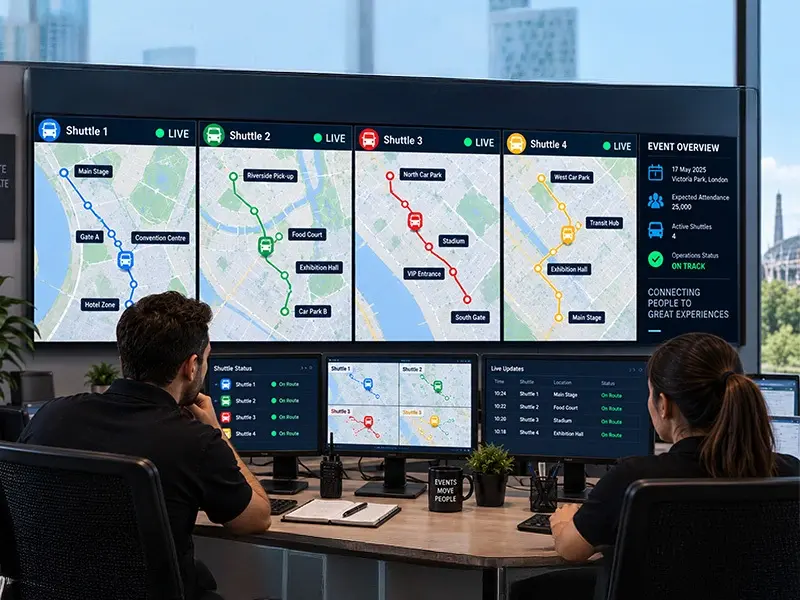
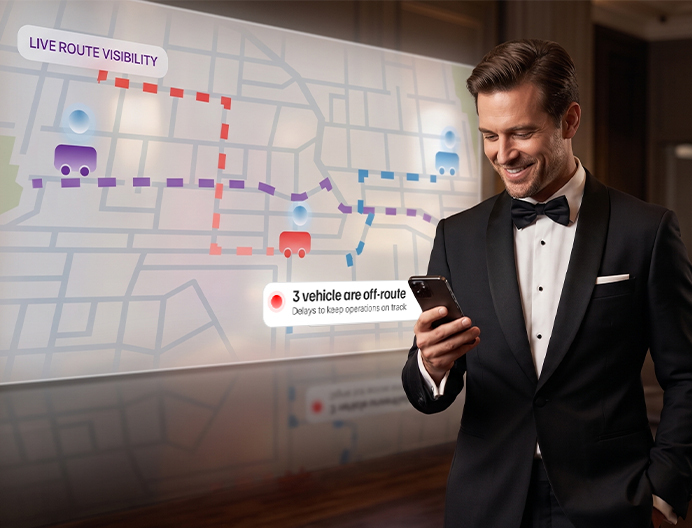
The software is purpose-built to provide fleet visibility, trip management, scheduling, and operational coordination in a single environment (dashboard). Current event transportation platforms focus on live maps, GPS tracking, ETA updates, centralized dashboards, and vehicle reassignment as plans change.
It is safe to say that transportation teams can capitalize on event management rather than maintaining the infrastructure that supports their tracking system and be burdened by the same.
Build vs. Buy vs. Manual: Which Option Fits?
Here’s a difference table that will provide a clear idea of what’s best for your consideration.